
When discussing prime real estate in Dubai, one address consistently leads the conversation: Palm Jumeirah.
More than an architectural landmark, the Palm remains one of the world’s most recognisable waterfront communities — and in 2025, it continues to stand at the forefront of Dubai’s prime property market.
But beyond prestige and branding, how strong are the fundamentals?
A Market Defined by Scarcity
Developed by Nakheel, Palm Jumeirah was built with a fixed supply of beachfront property:
- Approximately 1,500 villas across the fronds
- Just over 6,000 apartments across the trunk and crescent
- No additional fronds or new beachfront plots to be released
In a city known for expansion, Palm Jumeirah’s physical limitations create structural scarcity — a defining factor in its long-term capital stability.
Between 2022 and 2025, the Palm recorded cumulative price growth of approximately 35–40%, with villas leading performance during peak demand cycles.
2025 Market Performance: Value Over Volume
Dubai’s property market has entered a more balanced phase in 2025. On Palm Jumeirah, this has translated into pricing resilience rather than speculative surges.
While transaction volumes have moderated compared to peak years, values have remained firm — particularly in the villa and ultra-prime segments.
Today’s market is characterised by:
- Limited distressed inventory
- Well-capitalised international buyers
- Premium pricing for trophy and branded assets
Rather than volatility, the Palm is demonstrating sustainable capital appreciation — a key indicator of market maturity.
Pricing & Rental Returns
Palm Jumeirah sits firmly within Dubai’s prime bracket:
- Average prices range between AED 3,000–6,000 per sq. ft
- Ultra-luxury penthouses have exceeded AED 100 million
- Rental yields typically range between 5–7%
For context, prime markets such as central London or Monaco often generate sub-4% yields. Palm Jumeirah therefore offers a rare combination of lifestyle positioning and income performance.
What Are Investors Buying?
- Beachfront Villas – Signature Villas and Garden Homes remain long-term capital preservation assets for ultra-high-net-worth buyers.
- Luxury Apartments – Stronger rental liquidity and lower entry points.
- Branded Residences – Developments associated with names such as Atlantis The Royal and W Dubai – The Palm often command 20–30% premiums, supported by global branding and resale demand.
Comparative Positioning Within Dubai
While areas such as Downtown Dubai and Dubai Marina continue to attract strong activity, Palm Jumeirah occupies a distinct category due to its beachfront positioning and low-density layout.
Even compared with ultra-exclusive enclaves like Jumeirah Bay Island, the Palm benefits from deeper transaction liquidity and broader international buyer participation.
Golden Visa Advantage
Palm Jumeirah is a designated freehold area, allowing 100% foreign ownership.
Property investments of AED 2 million or more may qualify buyers for the UAE 10-year renewable Golden Visa, including family sponsorship. For international investors, this adds strategic residency value alongside financial returns.
The Bottom Line
Palm Jumeirah is not positioned as an entry-level market — nor is it designed to be.
What it offers instead is:
- Structural beachfront scarcity
- Sustained international demand
- 5–7% rental yields
- Demonstrated long-term capital growth
For buyers seeking a blend of income, appreciation and global status, Palm Jumeirah continues to justify its place at the top of Dubai’s waterfront hierarchy.
Access the Full 2025 Investment Guide
At Elysian Real Estate, our advisory team operates directly from Palm Jumeirah, providing on-the-ground insight into one of Dubai’s most competitive markets.
For a deeper analysis of performance data, pricing strategy and emerging opportunities:
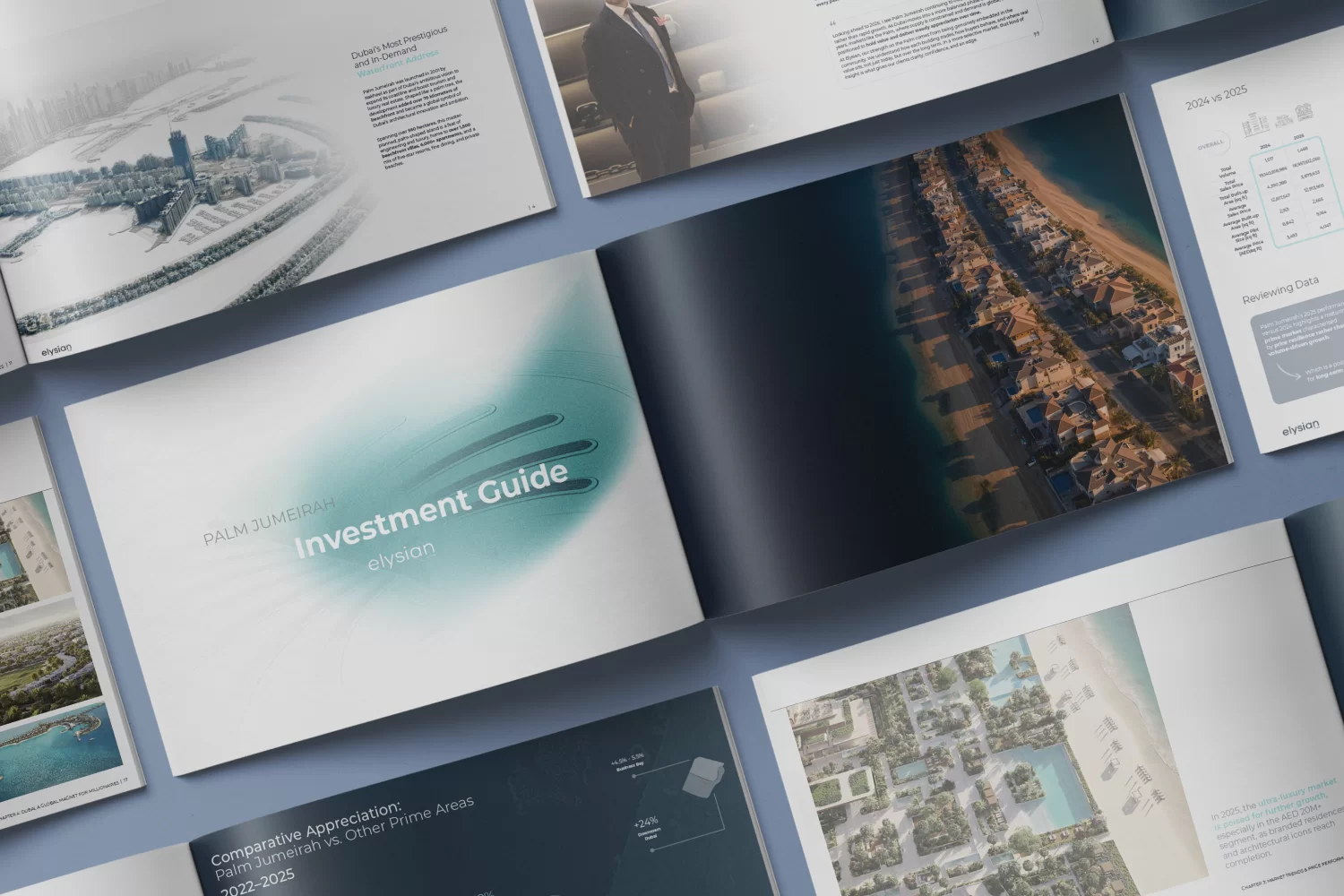
Download Elysian’s Palm Jumeirah Investment Guide (PDF)
For personalised advisory or access to exclusive listings, our Palm specialist team would be pleased to assist.